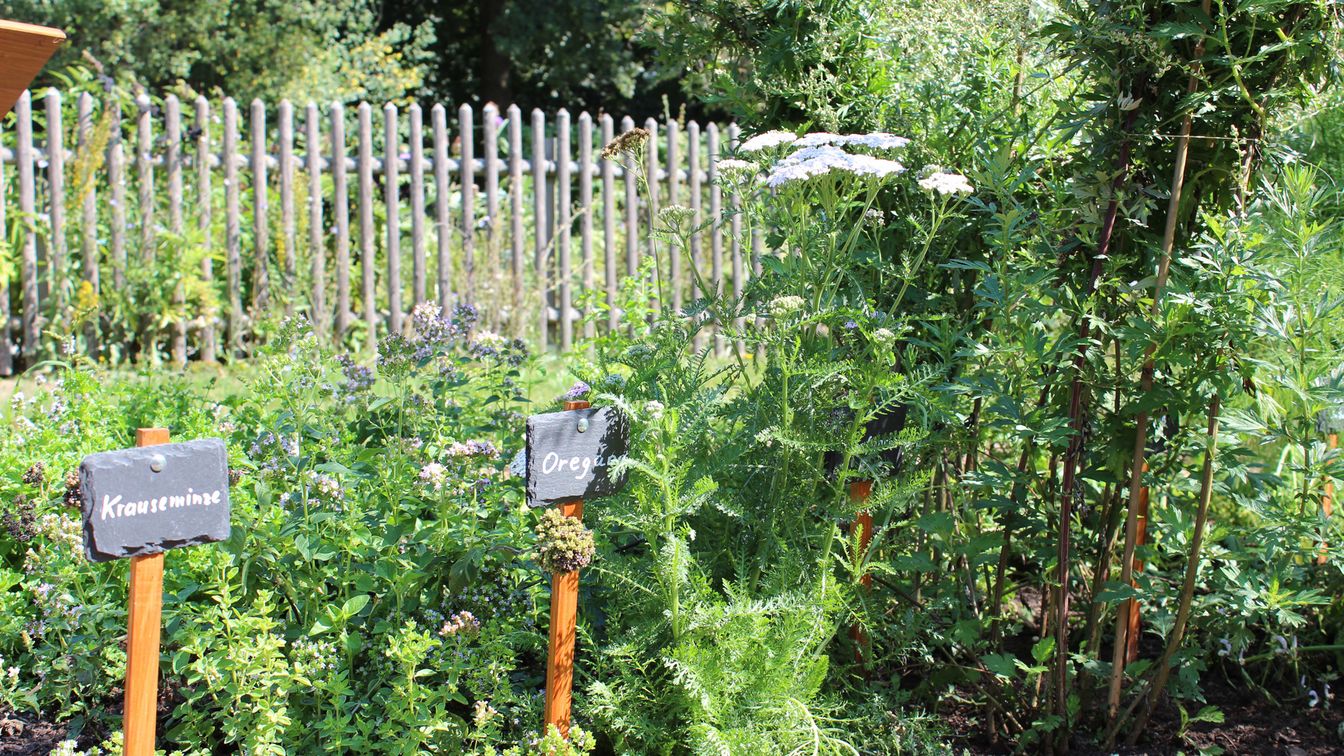
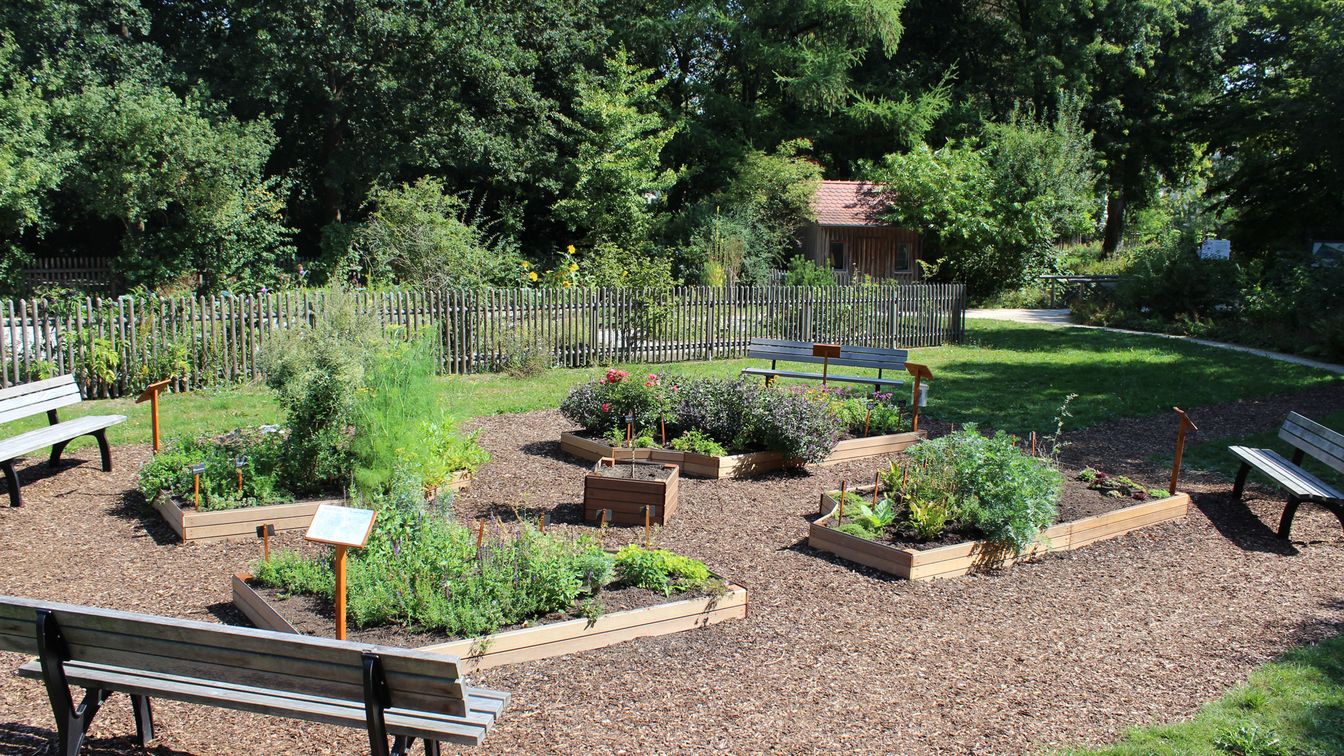
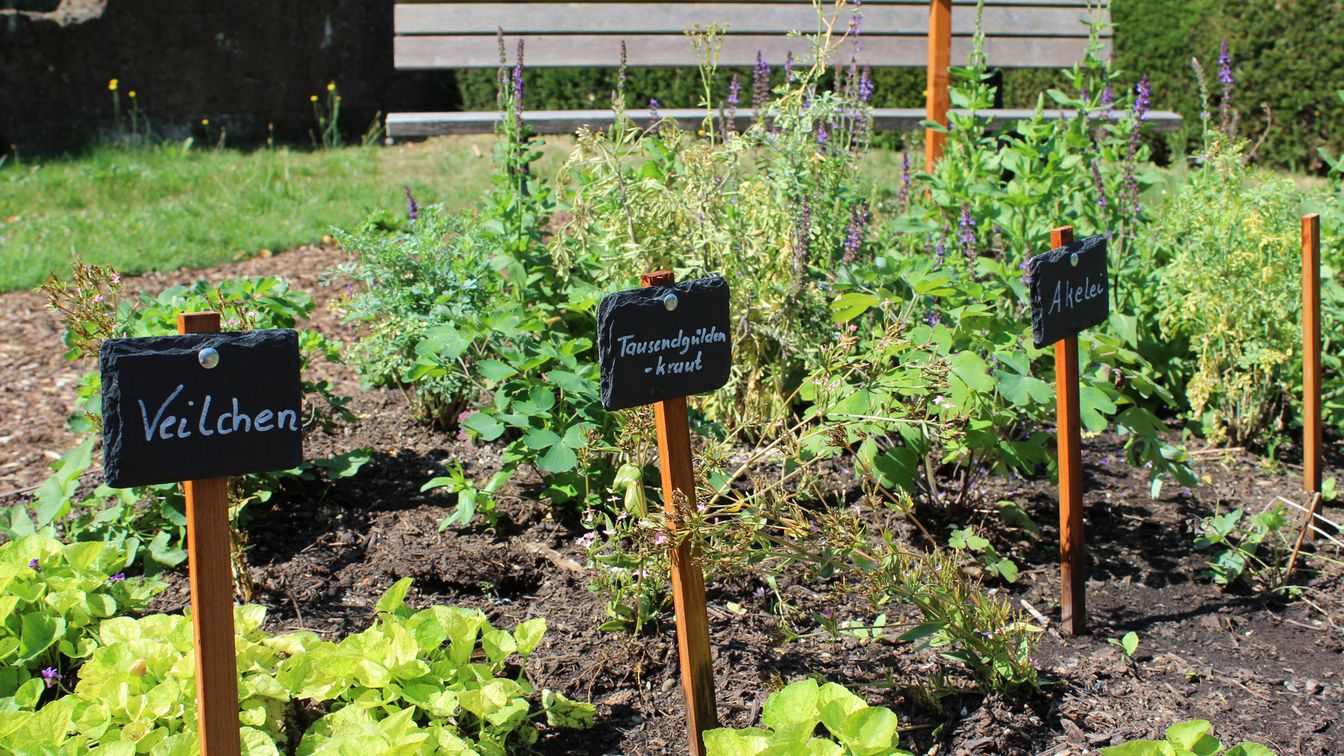
The five herb gardens illustrate the historical development of traditional European herbal medicine.
Middle Ages: Walahfrid Strabo Garden
Walahfrid Strabo (c. 809–849) was abbot of the Benedictine monastery on the island of Reichenau in Lake Constance in the early 9th century.
Between 830 and 840, he wrote the didactic poem "Liber de cultura hortorum," known as "Hortulus," about the island monastery's herb garden. This poem is one of the oldest sources on garden history in the German-speaking world. In 444 verses, it describes 24 medicinal herbs, culinary plants, and ornamental plants. The "Hortulus" describes the plants based on his observations and draws on ancient sources for their medicinal properties. The garden was laid out in the style of a medieval monastery garden.
Medieval Period: Hildegard von Bingen Garden
Hildegard von Bingen (1098–1179) was a Benedictine abbess, founder of monasteries, polymath, writer, and expert in natural medicine. In her fascinating work on medicine, she describes both health and illness. She shows concrete paths to a wholesome way of life and lifestyle, to a healthy life in harmony with ourselves, with creation, and with the Creator. Between 1141 and 1158, she wrote the works SCIVIAS (Know the Ways), PHYSICA (The Healing Power of Nature), and CAUSAE et CURAE (Causes and Treatment of Diseases). Even during her lifetime, she was venerated as a folk saint. She died on September 17, 1179, at the age of 81 in her convent on Rupertsberg near Bingen, which she had founded in 1150. She was officially canonized on May 10, 2012, and solemnly declared a Doctor of the Church by Pope Benedict XVI on October 7, 2012.
The design of the flowerbeds and planting is based on the healing effects of the plants on physical and mental illnesses.
Early Modern Period: Leonhart Fuchs Garden
In 1543, Leonhart Fuchs (1501–1566), a physician and botanist from Wemding and professor of medicine at the University of Tübingen, published a magnificent herbal. His "New Kreüterbuch" (New Herbal) presents the state of medical and botanical knowledge from the beginning of the Common Era to the 16th century in 511 splendid woodcuts. The work still follows the tradition of ancient models but also includes some plants from the New World. The garden is based on the strict geometric forms of the Renaissance. The four beds each display a selection of ornamental plants, culinary herbs, poisonous plants, and vegetables.
``` Modern: Sebastian Kneipp Garden
In the holistic health philosophy of Father Sebastian Kneipp (1821-1897), the founder of the Bad Wörishofen spa and healing tradition, medicinal herbs, along with hydrotherapy, a healthy diet, sufficient exercise, and a harmonious lifestyle, are essential elements.
In his 1886 bestseller "My Water Cure," Kneipp described over sixty herbs and minerals in the chapter "Pharmacy" for preparing teas, tinctures, powders, and oils. The efficacy of most of these medicinal herbs has been confirmed by modern science. In the rustic Kneipp Garden, these plants from Kneipp's home pharmacy are complemented by medicinal plants that play an important role in modern herbal medicine.
Modern: Men's Health Garden
The central feature is a living sundial, where the person themselves acts as the pointer, indicating the time of day with their own shadow when the sun is shining. In addition, a modern raised bed introduces visitors to twelve medicinal plants beneficial to men's health.
Here's how to get to the medicinal herb gardens.